

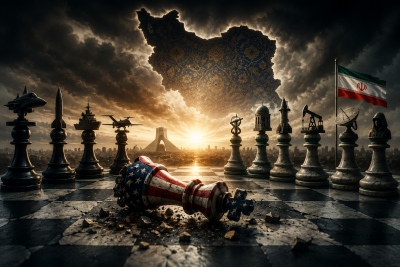
At a time when the Middle East remains on a geopolitical minefield and the USA appeared until recently ready even for a military conflict with Iran, Donald Trump seems to be changing track again, choosing a hard bargain of interests instead of the rhetoric of zero tolerance that he himself cultivated towards Tehran. According to Axios, Washington is now close to an agreement that not only offers a easing of sanctions, but essentially restores the regime of Tehran to the international energy game, already causing strong reactions in Israel and allies of the USA.
Very close to an agreement
According to Axios, the United States and Iran are very close to signing an agreement that could prevent further escalation in the Middle East, reduce pressure on global oil markets, and pave the way for new negotiations around the Iranian nuclear program. The report states that the agreement provides for an extension of the truce for 60 days, during which the Strait of Hormuz will open again, Iran will be able to export oil freely, and talks will begin to limit its nuclear program. Although both Donald Trump and the mediators hinted that the announcement could be made even today, 24 May, the agreement has not been finalized and the possibility remains open that it could collapse at the last moment. An American official presented to Axios a detailed draft of the agreement, which, as noted, was largely confirmed by other sources participating in the negotiations. From the side of Tehran there is no official confirmation of the details yet, however Iran is also said to recognize that the talks are close to an agreement.
What the agreement provides
The two sides are expected to sign a memorandum of understanding, MOU, lasting 60 days, with the possibility of extension upon mutual consent. During this period, the Strait of Hormuz will remain open without tolls, while Iran will commit to removing the mines it had placed so that navigation can be fully restored. In exchange, the USA will lift the blockade on Iranian ports and proceed with exemptions from certain sanctions, allowing Iran to sell oil freely. An American official admitted that the measure will significantly boost the economy of Iran, noting however that it will simultaneously offer significant relief to the global oil market as well. According to the same source, the faster Iran removes the mines and restores navigation, the quicker the American blockade will be lifted. The same official described the doctrine relief for performance, meaning relief in exchange for specific actions, as a basic principle of Donald Trump. Iran was asking for an immediate unfreezing of funds and a permanent lifting of sanctions, however Washington is said to have made it clear that this will happen only if there are tangible concessions.
The nuclear program remains at the center
The draft of the MOU also includes commitments from the side of Iran that it will never seek to acquire nuclear weapons and that it will negotiate the suspension of the uranium enrichment program, as well as the removal of stockpiles of highly enriched uranium. Two sources with knowledge of the contacts stated that Tehran has already given verbal assurances through the mediators regarding the scope of the concessions it is willing to make. The USA, for their part, appear willing to discuss the lifting of sanctions and the unfreezing of Iranian funds within the 60 day period, however these measures will be implemented only within the framework of a final and verifiable agreement. At the same time, the American forces deployed in the region in recent months will remain there during the transitional period and will withdraw only if there is a definitive agreement.
The dimension between Israel and Hezbollah
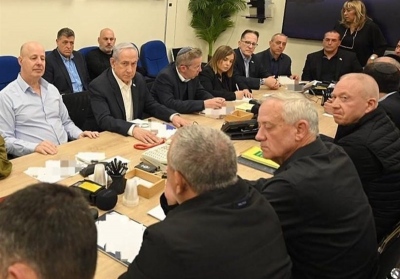
Of particular interest is the fact that the draft mentions that the war between Israel and Hebollah in Lebanon will also be terminated. According to an Israeli official, Prime Minister Benjamin Netanyahu expressed concerns about this specific term during a telephone conversation with Donald Trump on Saturday, 23/5/2026. The same sources state that he expressed reservations about other points of the agreement as well, however he did so in a respectful and discreet manner. An American official argued that this is not a one sided truce and made it clear that if Hebollah attempts to rearm or launch attacks, Israel will maintain the right to intervene. If Hebollah behaves properly, then Israel will also behave properly, he characteristically stated. The same official added that Bibi has his own internal political needs, but Trump must think of the interests of the USA and the global economy, using the well known nickname of Netanyahu.
How the negotiations progressed
According to Axios, Donald Trump communicated on Saturday with a series of Arab and Muslim leaders to discuss the agreement and all appeared supportive. Among them was the president of the United Arab Emirates, Mohammed bin Zayed, as well as the leaders of Saudi Arabia, Qatar, Egypt, Turkey, and Pakistan, countries that are actively participating in the mediation efforts. Pakistan is said to have undertaken the central role in the negotiations, led by Field Marshal Asim Munir, who was in Tehran on Friday and Saturday to finalize the agreement. Axios also notes that Donald Trump was vacillating in recent days between promoting the agreement and choosing massive military strikes against Iran. However, by Saturday evening he was said to favor the diplomatic solution.
What is expected
The White House appears optimistic that the remaining differences will be bridged within the next few hours and that the agreement could be announced even today. An American official nevertheless warned that it is not excluded that the agreement might not hold even for the entire 60 day period, if the USA judge that Iran is not negotiating seriously on its nuclear program. On the other side, Washington considers that the economic pressure faced by Tehran functions as a strong incentive for a comprehensive agreement that will lead to a lifting of sanctions and release of funds. It will be interesting to see how far Iran is truly willing to go. If it indeed wants to change course, then this next phase will force it to make critical decisions about what kind of country it wants to be, the American official stated. According to advisers of Donald Trump, if the American demands regarding the Iranian nuclear program are met, the American president is ready to proceed with a broader rapprochement with Iran and give it the opportunity to exploit, as he believes, its huge economic potential.
www.bankingnews.gr








Σχόλια αναγνωστών